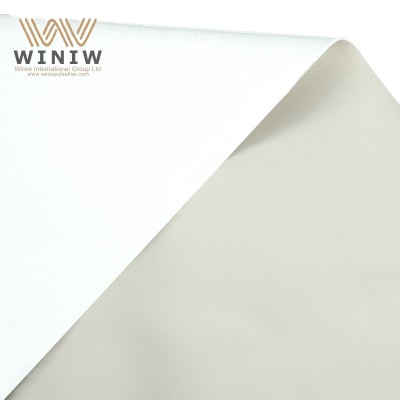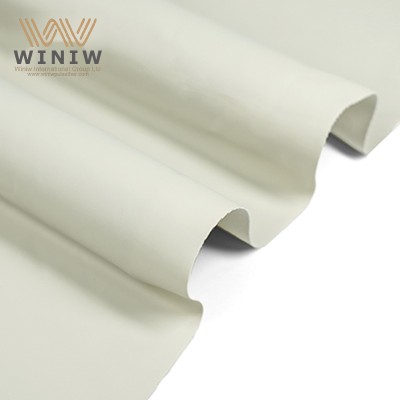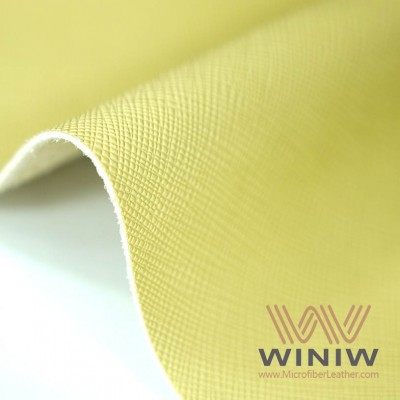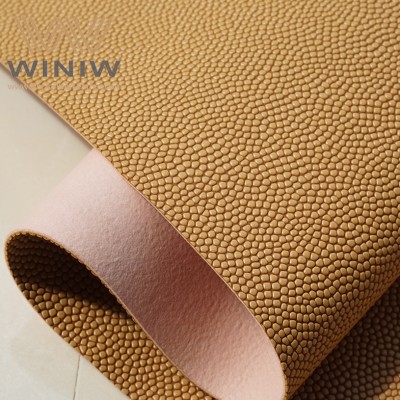
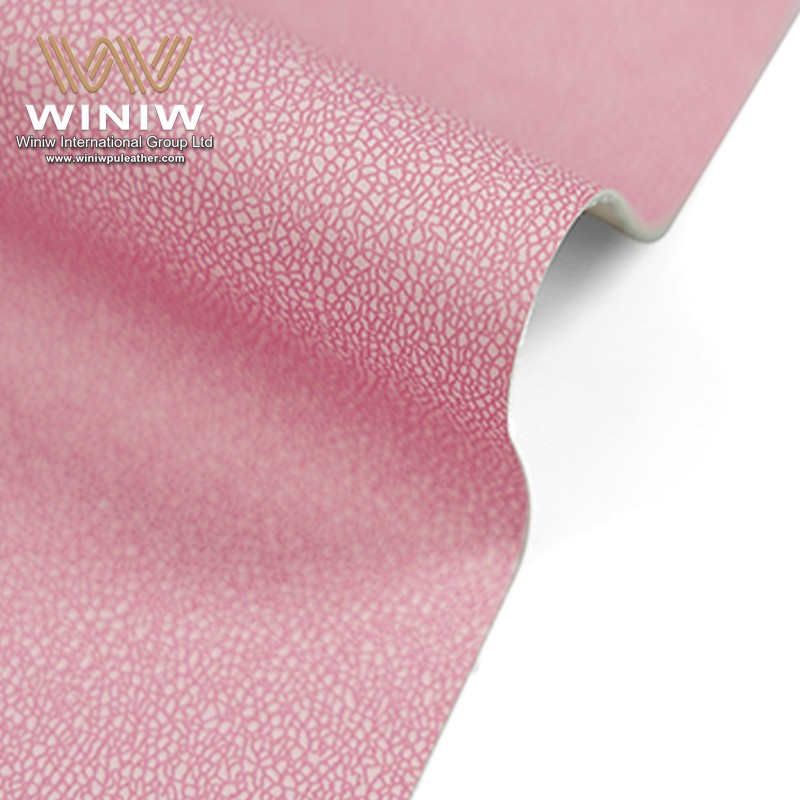
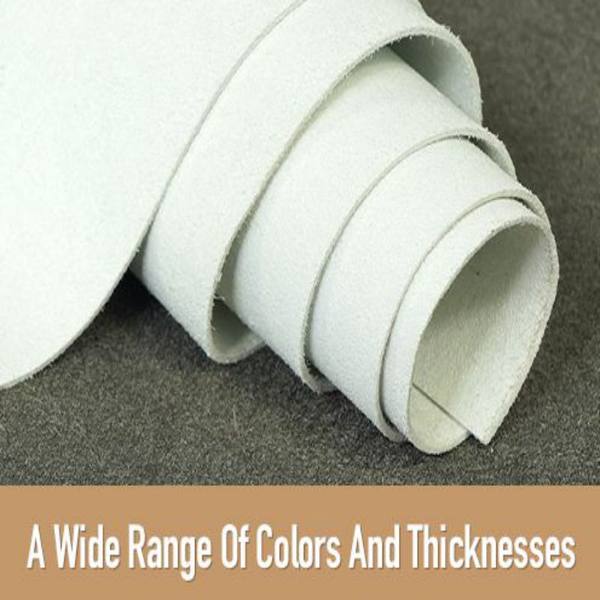
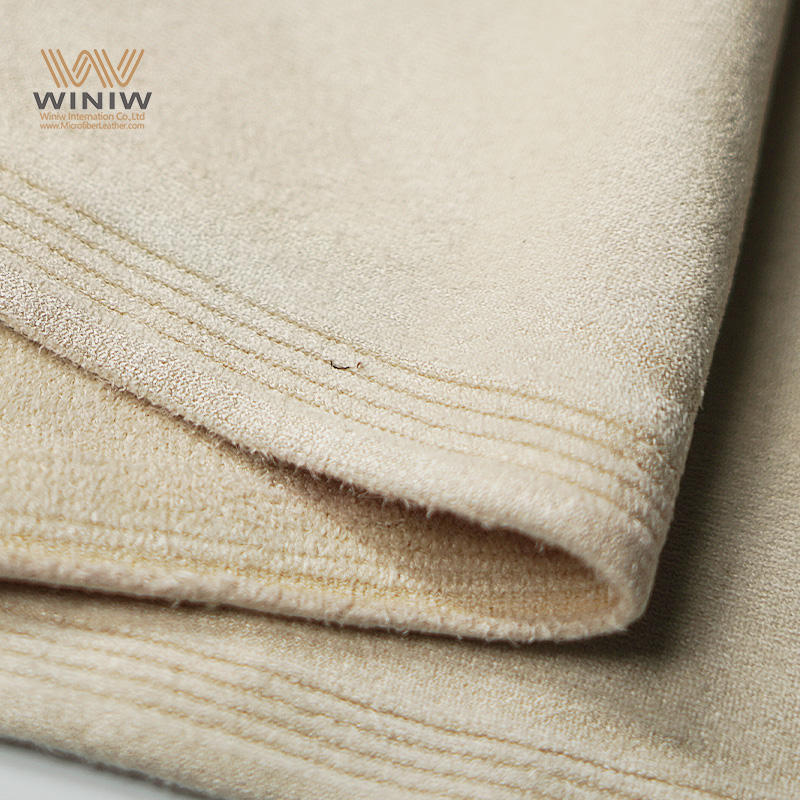
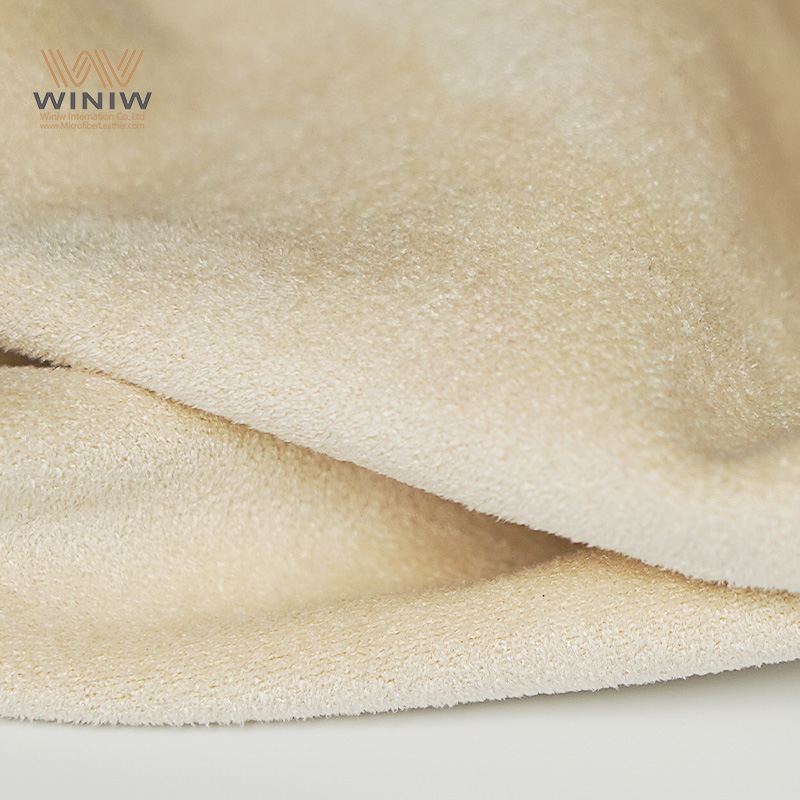
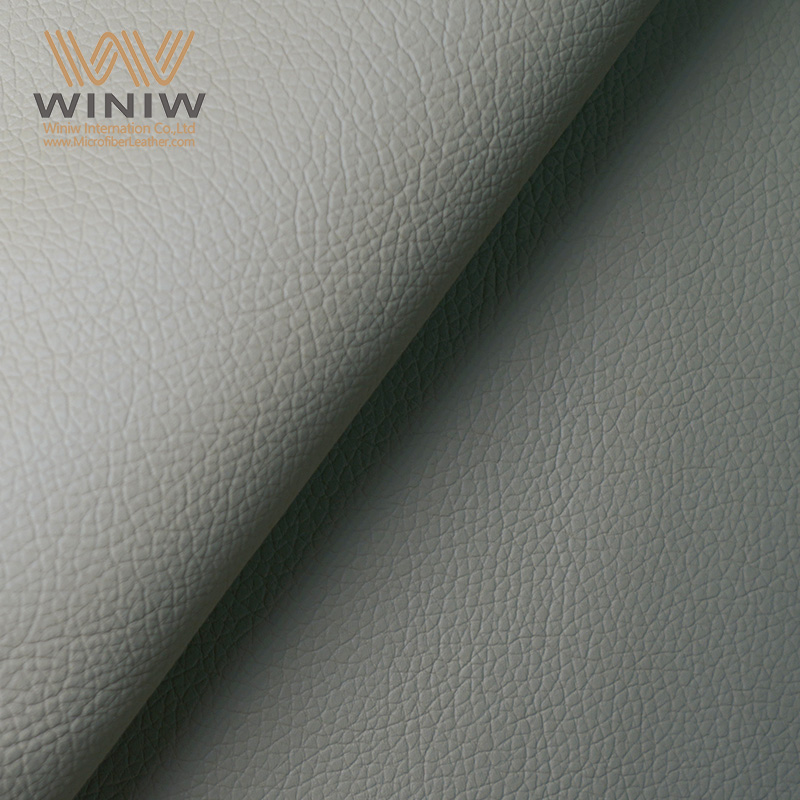
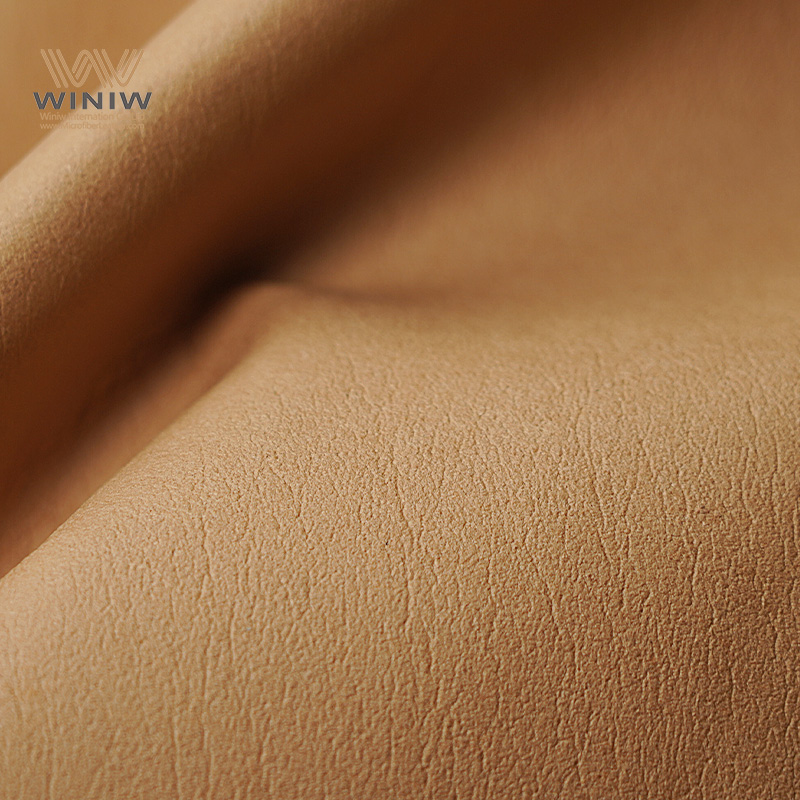
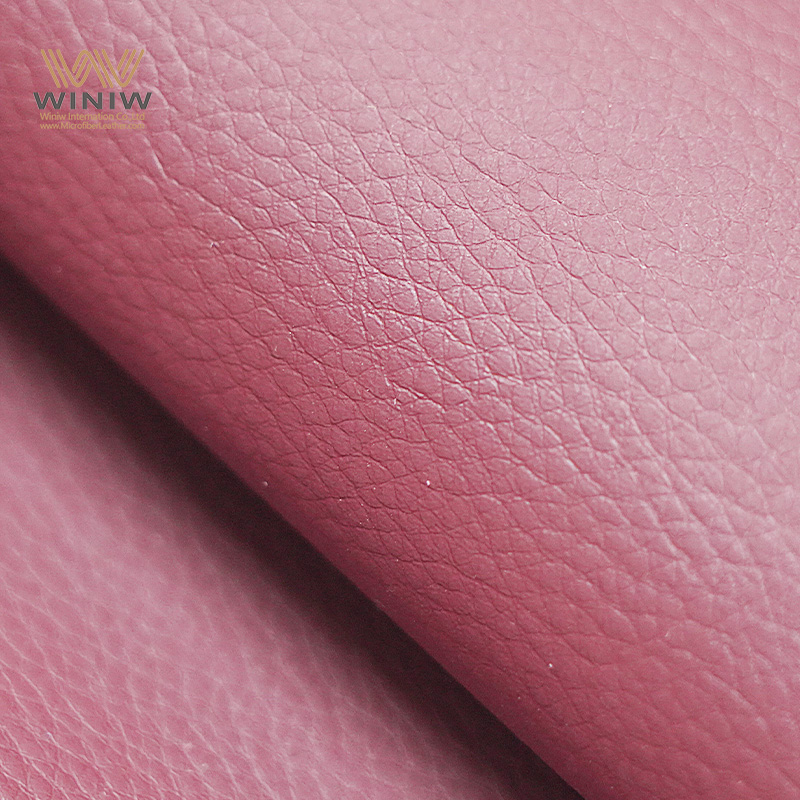
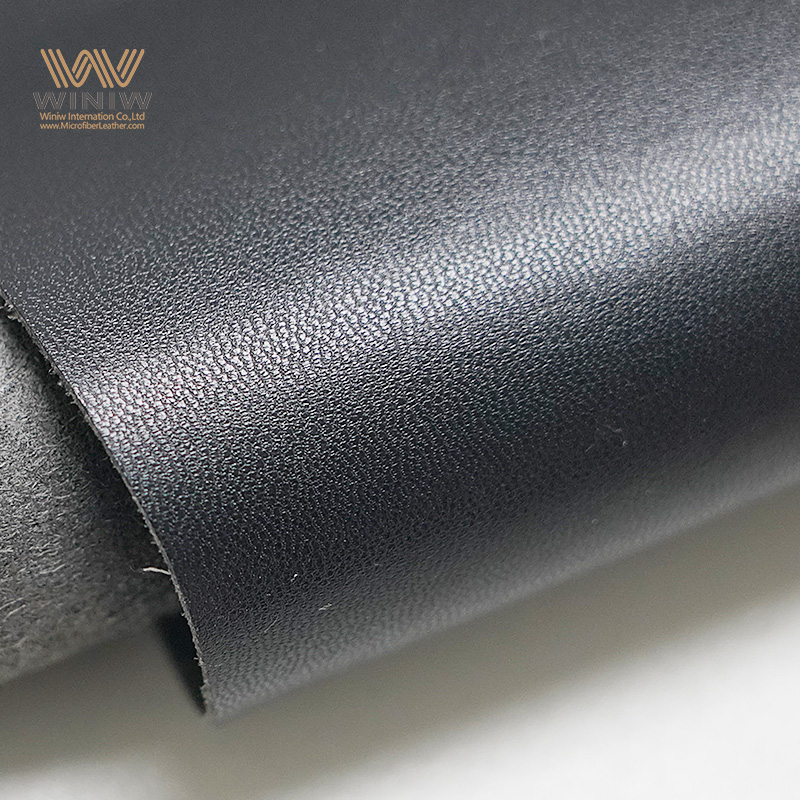
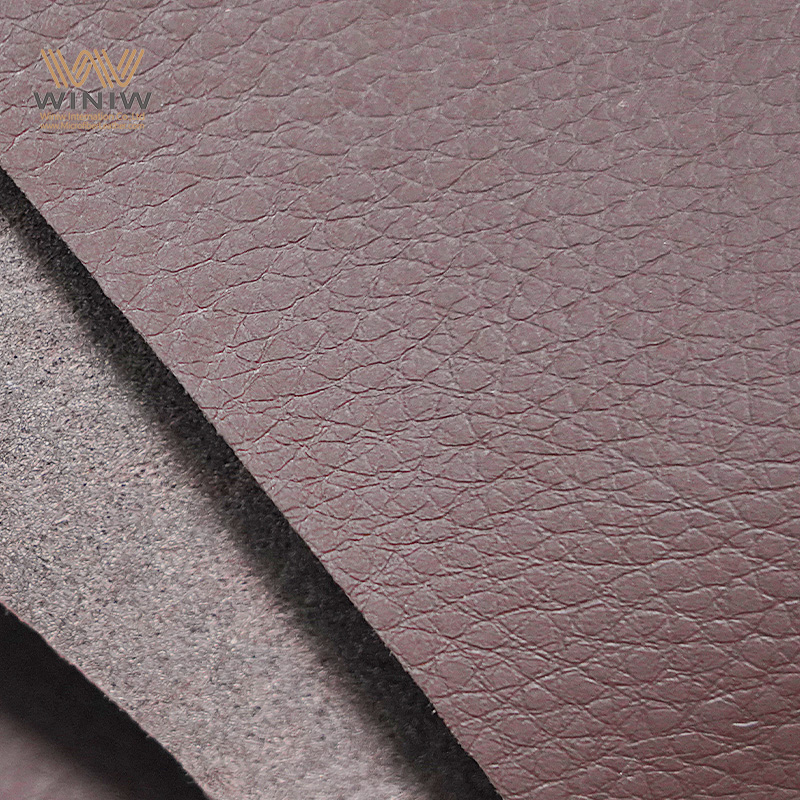
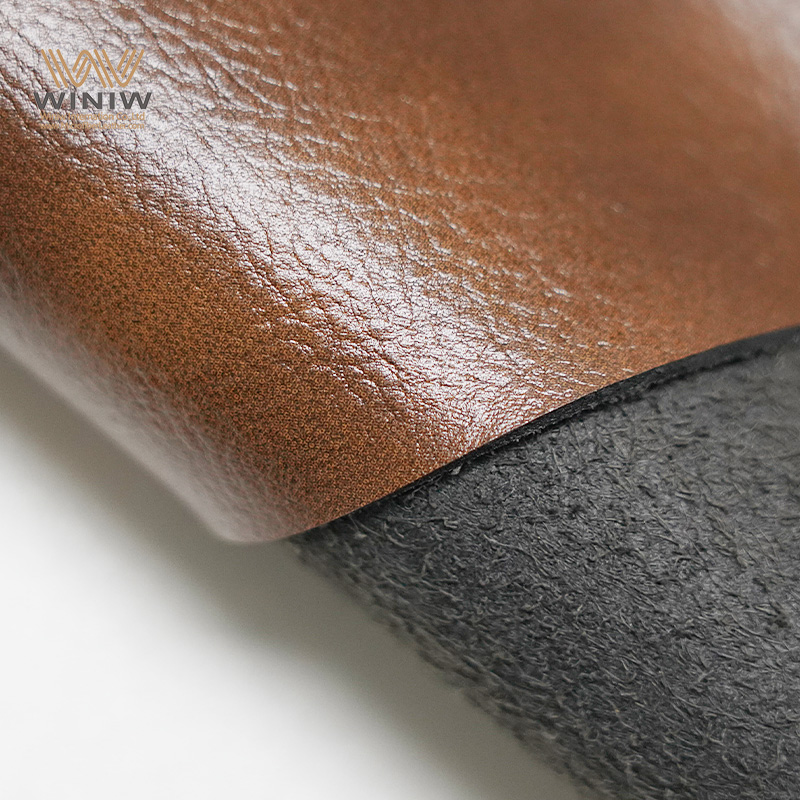
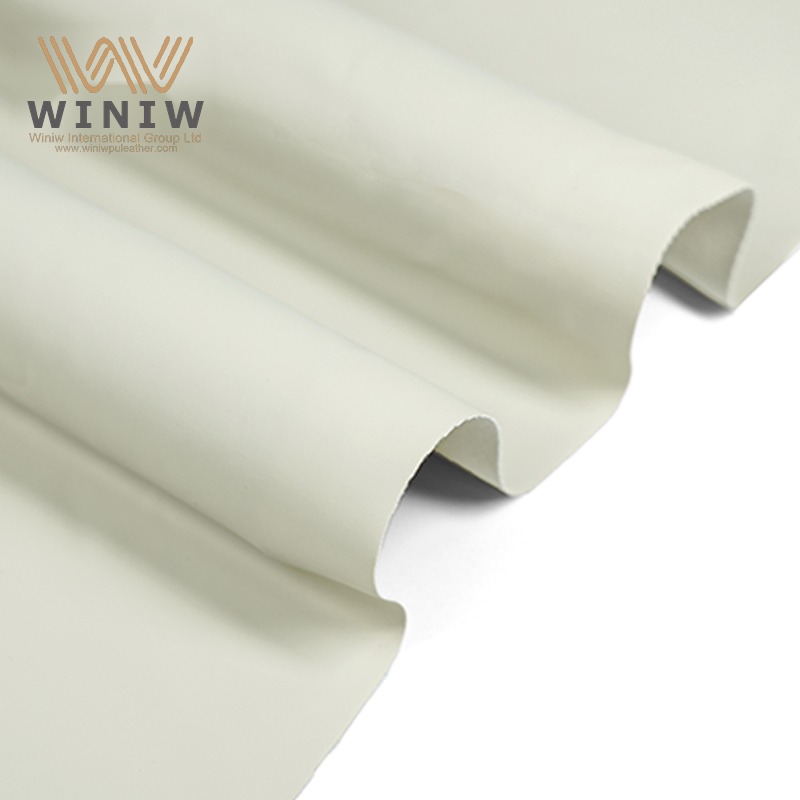
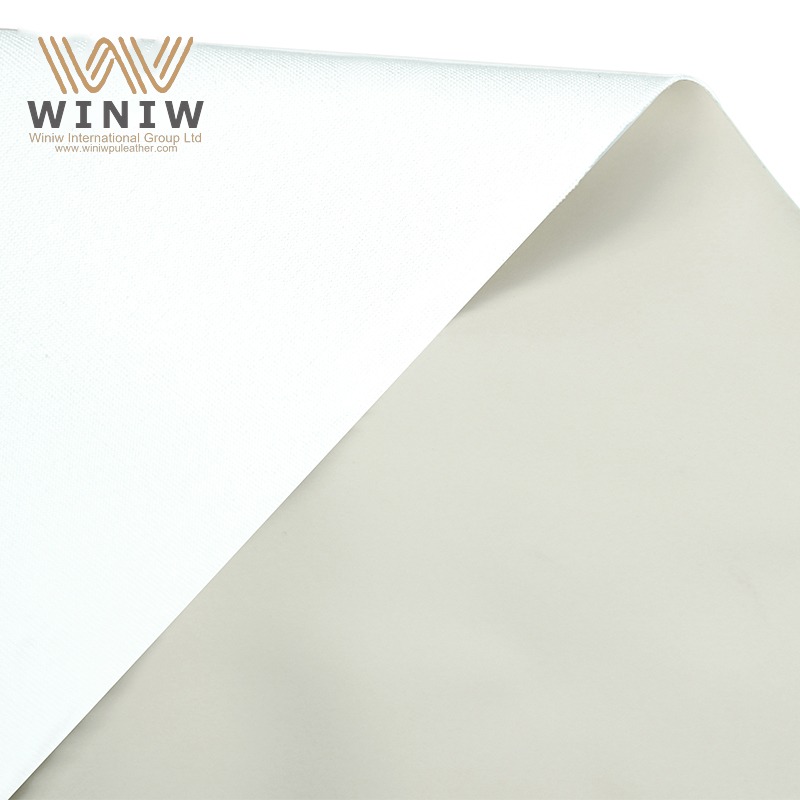
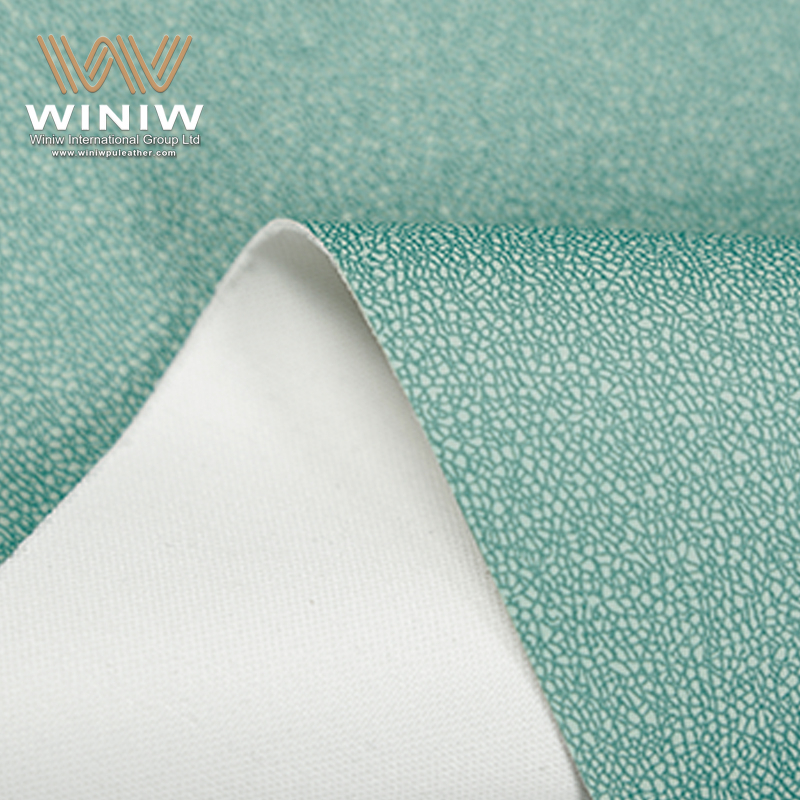
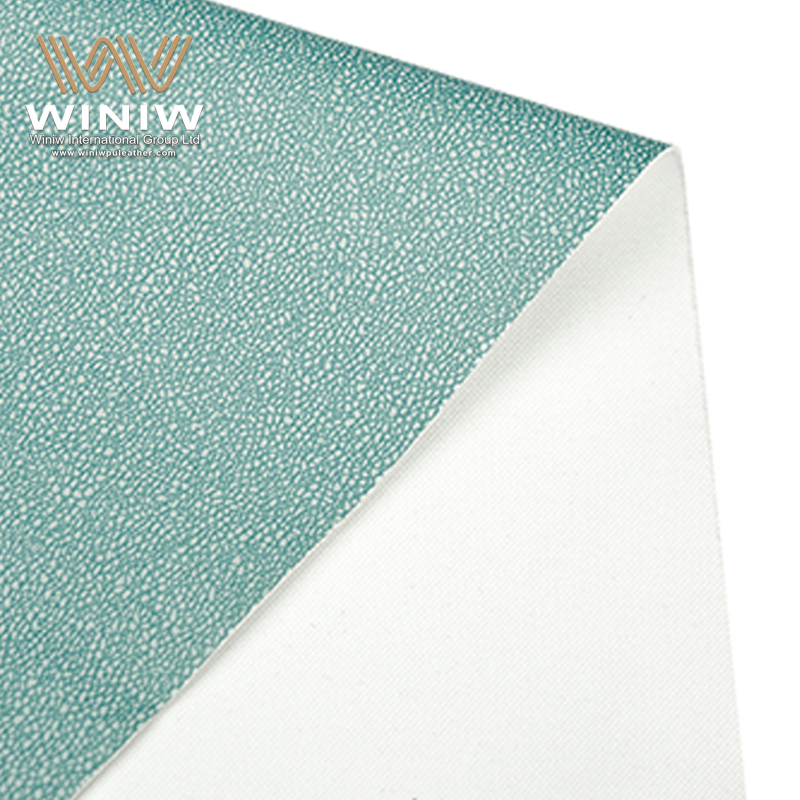
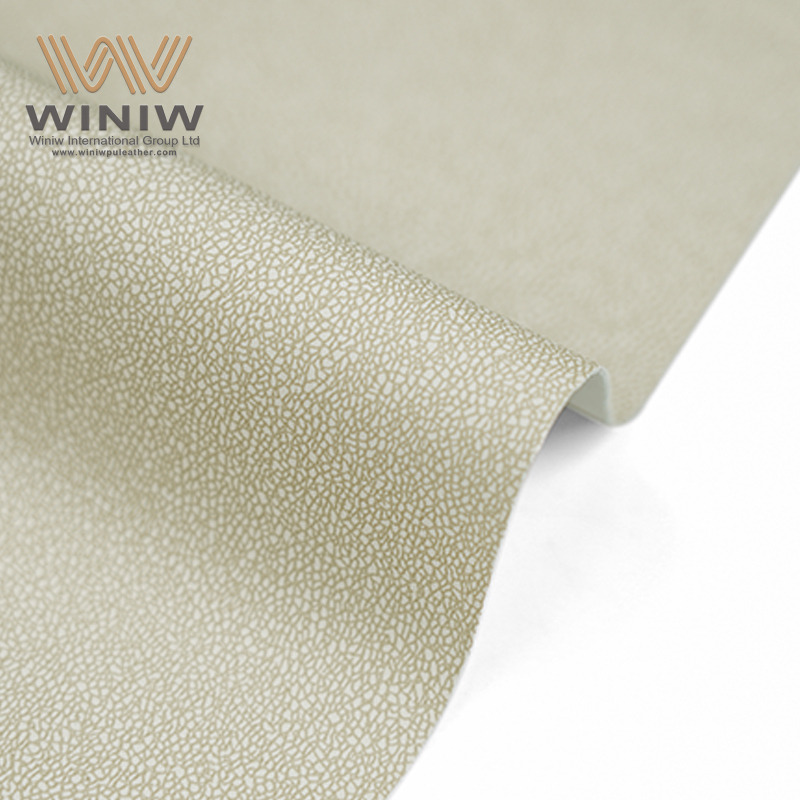
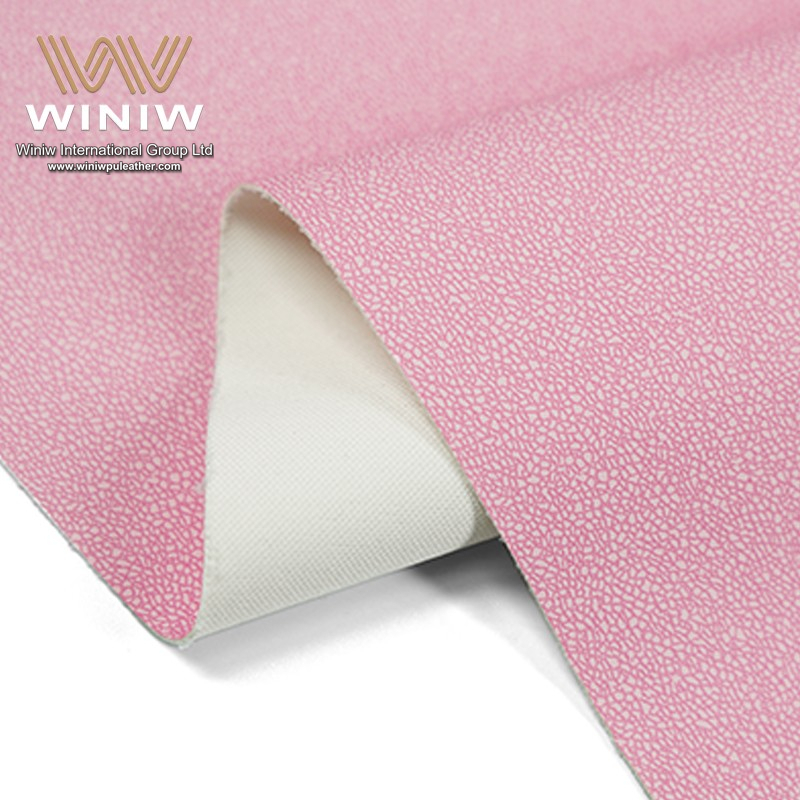
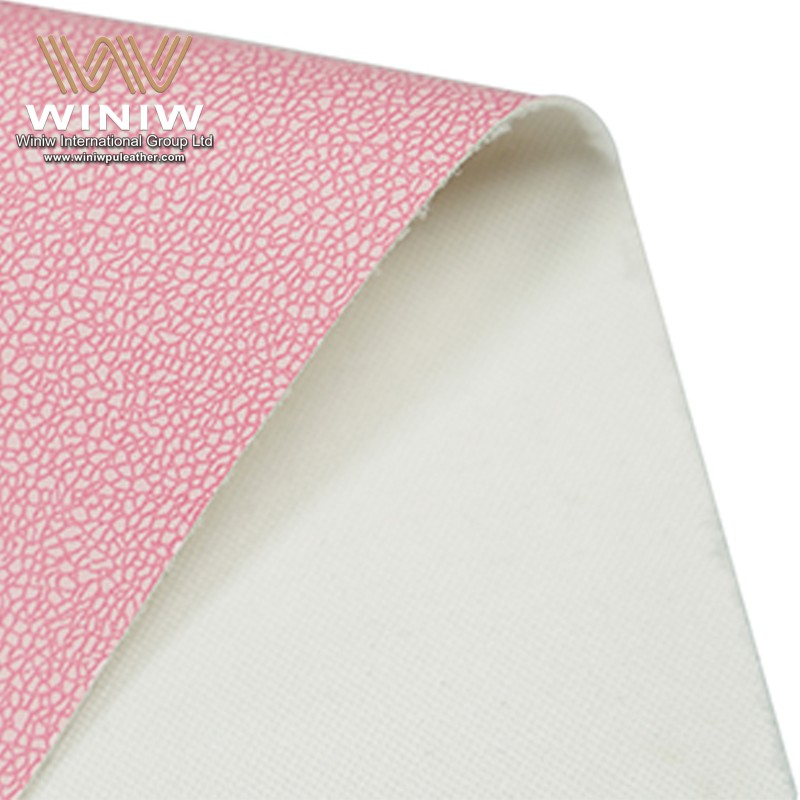
Crackle-embossed PU for jewelry displays: counter pads, step risers and showcase plinths in 0.4 mm, 0.5 mm and 0.6 mm on a white nonwoven base. The emboss is pressed into the coating rather than printed, so depth and definition are set on the roll; a shallow crackle keeps the cleaning easy and hides fine scuffs. Minimum order 300 m, cut to your panel plan.
Matériel :
Microfiber LeatherComposition :
55% Nylon / 45% PU, white nonwoven baseÉpaisseur :
0.4 / 0.5 / 0.6 mmLargeur :
137 cm (54")Couleur :
Custom — matched to swatch or Pantone referenceDélai de mise en œuvre :
Confirmed per orderCapacité de production :
1,000,000 m / month (all product lines)Embossed PU is bought for one reason: the surface carries a pattern that a plain film cannot. On a jewelry display that pattern is doing a job rather than decorating it, because a counter pad is looked at from 40 cm under a spot lamp, and any surface that reads as perfectly flat reads as plastic. What most buyers discover late is that an emboss is a mould impression, not a printed layer, so the pattern and the fold behaviour of the sheet are decided in the same pass. This page is written for buyers specifying textured PU for display pads, counter liners and showcase surfaces — the questions are about depth, definition, how the face takes a crease, and what happens to the texture after a season of cleaning.
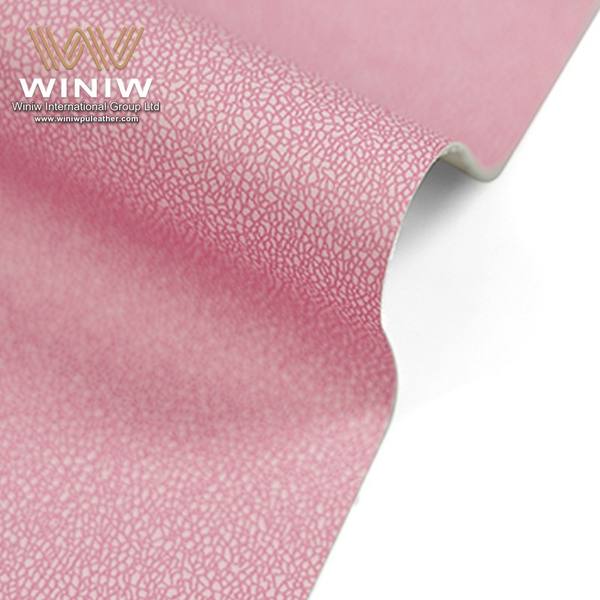
A textured PU face is produced by running the coated base between an engraved steel roll and a rubber backing roll while the coating is still thermoplastic. The roll carries the negative of the pattern; the sheet leaves with the positive. Three things follow from that, and all three matter on a purchase order.
First, the pattern has a depth, and depth is a machine setting rather than a design file. A pattern pressed shallow gives a face that survives a tight fold; pressed deep it gives a face that reads clearly at a distance but whitens along a sharp corner. Second, the roll is shared across shades, so the same crackle you approve on a pink swatch will read differently on a pale cream, because a pale face reflects more light out of the valleys. Third, the pattern does not stop at the edge of the roll — a sheet cut from the last 200 mm of a run can carry a slightly softer impression where the roll pressure falls away. None of this is visible on a 100 mm swatch, and all of it is visible on a 600 mm display pad.
A display pad is rarely a flat sheet. It is wrapped over a board, folded into a rebate, or turned around the nose of a step. Every one of those operations puts the embossed face into compression on the inside of the fold and tension on the outside, and the pattern behaves differently on each side.
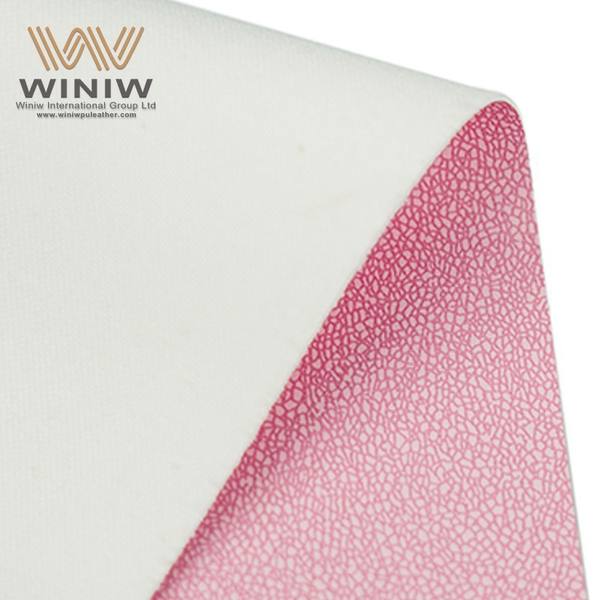
On the outside of a fold the coating is stretched. A shallow crackle opens into a fine network of lines that read as grain; a deep one opens into visible splits and the pale base shows through as a light haze along the corner. On the inside of the fold the coating is compressed and the pattern closes up, so a wrapped corner often looks smoother than the flat panel beside it — which is why a box covered in a deep emboss can look two different ways in one photograph.
|
Parameter |
What we hold |
Why it matters on a display |
|
Thickness |
0.4 / 0.5 / 0.6 mm |
Whether a pad sits flat on its board or cups at the edges |
|
Face |
PU coating, crackle emboss, matte |
How the surface reads under a spot lamp and how it wears |
|
Backing |
White nonwoven |
Fold memory on a wrapped edge; whether a pale face stays clean |
|
Colour |
Matched to a swatch or Pantone reference |
Whether a set of pads stays consistent across a run |
|
Format |
Full roll, slit roll, cut panels |
Cutting labour at your bench or ours |
|
Minimum order |
300 m |
Whether one showroom refit is viable on its own |
|
Lead time |
Confirmed per order |
Whether the refit date holds |
Two words get used interchangeably by buyers and mean different things to the person setting the roll. Definition is how sharply the pattern boundary reads — whether a line is crisp or soft. Depth is how far the valleys sit below the crests. A pattern can be sharply defined and shallow, and that is usually the right answer for a surface that will be wiped: definition gives the visual effect, shallow valleys give the cleaning.
On a jewelry display the practical test is not visual, it is tactile. Run a thumb across the face. A shallow crackle with good definition feels like a fine grain; a deep one feels like a series of ridges and will hold lint at the base of every one of them. In a boutique where pads are dusted daily with a dry cloth, the difference shows up in about a month, and it is the single most common reason buyers ask us to re-run a shade in a lighter emboss.
Not every surface in a jewelry presentation wants texture. The working rule we give buyers is that texture belongs where a hand or a tray lands, and belongs less where a piece is laid down and picked up by the piece itself.
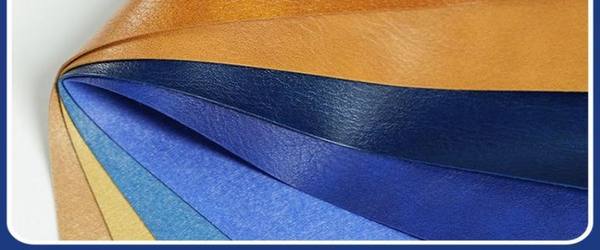
The failure mode on a textured PU display is not wear, it is cleaning. A wet cloth with a solvent-heavy cleaner will soften the coating, and a textured face that has been softened loses its definition permanently — the pattern is still there, but the crests round over and the surface reads as smeared rather than grained.
The routine that keeps a crackle face intact is unglamorous. Dry first, with a soft brush or a microfibre cloth, because most of what sits in the valleys is lint and dust and water turns it into a paste that dries in the pattern. Then a damp cloth with neutral detergent, wrung out, and a wipe along the grain rather than across it. Nothing abrasive, nothing with a solvent load, and no steam. Any display surface in a boutique gets cleaned far more often than it gets worn, so the cleaning method is part of the specification whether or not it is written down.
An embossed face invites claims that the material cannot support. It is not scratch proof: a crackle breaks up a fine scuff so it reads as grain, which is a visual effect and not a resistance figure. It is not a non slip surface by itself, unless the pattern has been specified for that and measured. It does not protect jewelry from tarnishing — anti tarnish behaviour comes from what the lining is laminated with, not from the PU face, and we do not sell a texture as a tarnish barrier.
What we do hold is a material level REACH SVHC screening, Intertek report SZHH01505701, with all screened substances below the 0.1% declaration threshold. That is a screening on the material, not a certificate for a finished display, and it is quoted as such. If a buyer needs a specific test on the batch they order — colour fastness to rubbing, a thickness tolerance, an abrasion cycle count — it is run against the method they name, on their material, rather than carried over from another product. Our selection guide for jewelry roll lining material explains the same distinction for a different format.
A swatch board will not settle the two questions that decide a display run: how the pattern reads under the lamp you actually use, and how the face behaves at the radius you actually wrap. Both are answered on a pad at finished size, not on a 100 mm card. Our practice on a first order is to send an A4 card in the shade under discussion, cut a 300 mm square from it, wrap that square over the real board with the real adhesive, and put it under the real lamp for a week before the roll is ordered.
Two things come out of that week that a spec sheet cannot give you. First, whether the crackle opens at the corner you have drawn — the usual outcome is that 0.5 mm works and 0.6 mm needs a bigger radius. Second, whether a pale shade picks up a shadow from the nonwoven base once it is glued down, which only shows after the adhesive has cured.
Two documents travel with this material. The first is a REACH SVHC screening at material level — Intertek report SZHH01505701, every screened substance below the 0.1% (w/w) declaration threshold under Regulation (EC) No 1907/2006 Article 33. The second is a reading sample, an A4 card in the shade you are considering, because a PDF cannot tell you how a crackle face behaves in your own light.
Method data is held for other lines rather than for this one, and we keep the distinction visible. Colour fastness to light (ISO 105 B02) and abrasion resistance (ISO 12947-2) are on file for our automotive suede line, on a different substrate and a different end use. Those results are not transferred here as a claim. If a display programme needs a fastness or abrasion figure on this sheet, the same methods are run against your batch and reported with the report number, rather than quoted from a neighbouring product.
Can the same emboss be run in a different depth? Yes, within the range the roll allows. Depth is a pressure setting, so a shade can be re-run lighter without changing the pattern. What cannot be changed is the pattern itself on a standard roll — a different crackle needs a different engraved roll, and that is a tooling decision rather than a running parameter.
Does the pattern have a direction? A crackle is non directional, so panels can be cut across or down the roll without a visible mismatch. Directional patterns — a linear grain, a herringbone — do have a direction, and panels cut both ways in one display will read differently under a raking light.
Which thickness for a pad that is wrapped over board? 0.4 mm wraps a tight radius without lifting; 0.5 mm is the usual middle for a pad with a turned edge; 0.6 mm holds a flat panel without adhesive but fights a corner. The choice follows the radius, not the shade.
Will a pale shade show marks more than a dark one? It will show a different kind of mark. On a pale face a dark scuff is obvious but a light one disappears; on a dark face the reverse. The crackle helps in both cases by breaking the mark into the pattern.
How do we approve the pattern before a run? On a pad at the real size, in the real shade, under the real lamp. A swatch will not show the depth problem and it will not show how the roll behaves at the edge.

A boutique refit is ordered off a plan, not off a colour reference. The plan lists the plinth heights, the risers under each tray, the counter pad sizes and the showcase shelf depths, and it is that list rather than the swatch that decides how much material leaves the warehouse. Three lines on it are worth arguing about before the order is placed.
The first is the offcut allowance. A plinth wrapped in one piece wastes a border on all four sides; the same plinth wrapped in two panels wastes a seam instead. On a refit with eight plinths the difference in offcut is more than the cost of a second A4 card, and it is decided on the cutting plan rather than at the bench. The second is board thickness. A 3 mm board and a 6 mm board take the same face but not the same corner radius, so a face approved on one will look tighter on the other. The third is who glues. A workshop that sprays adhesive and a workshop that uses a roller coat will get different bleed through a pale face, and the pale shades are where that shows.
None of this appears on a product page usually, because it belongs to the fit out rather than to the material. It matters here because every one of those decisions lands on the same sheet of textured PU, and a face that reads beautifully on a hand sample can look patchy on a plinth under a raking spot lamp if the offcut was taken from the wrong end of the roll.
Specifying a textured PU for a display run?
Send the panel size, the fold radius and the shade you have in mind. We will confirm the thickness that holds that radius, the emboss depth that survives it, and put an A4 pad in the post so the pattern can be judged under your own lamp before a roll is opened.
Request a quote and an A4 swatchÉTIQUETTES CHAUDES :




































Business Phone : +8618150976625
E-mail : Hello@MicrofiberLeather.com
Mobile & WhatsApp : +8618150976625
Adresse : W6-302 Shimao Manhadun Shuanglong Road, Jinjiang Quanzhou Fujian China



© droits d'auteur 2022 Winiw International Co., Ltd.Tous les droits sont réservés.
XML | Politique de confidentialité |