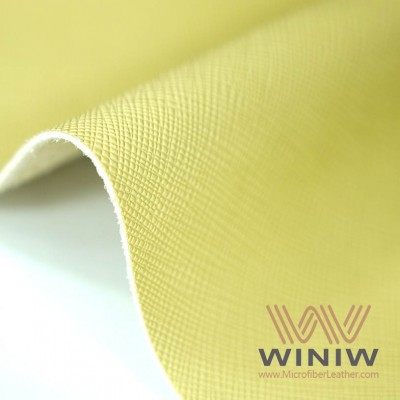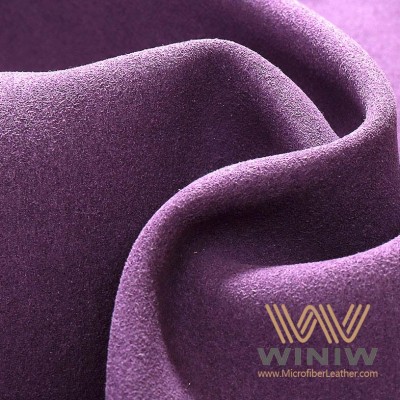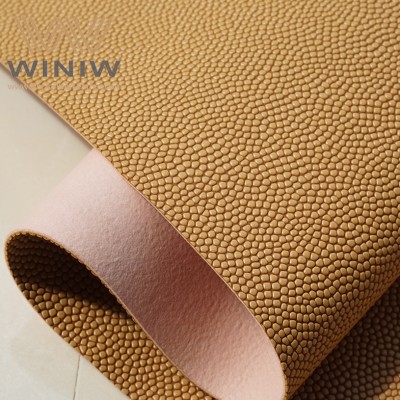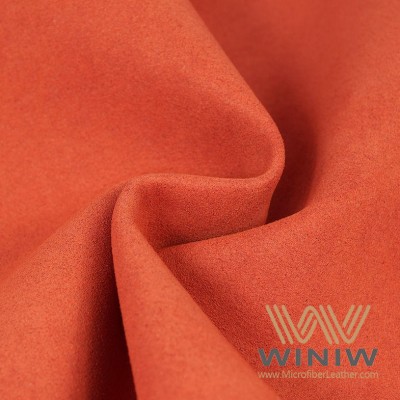
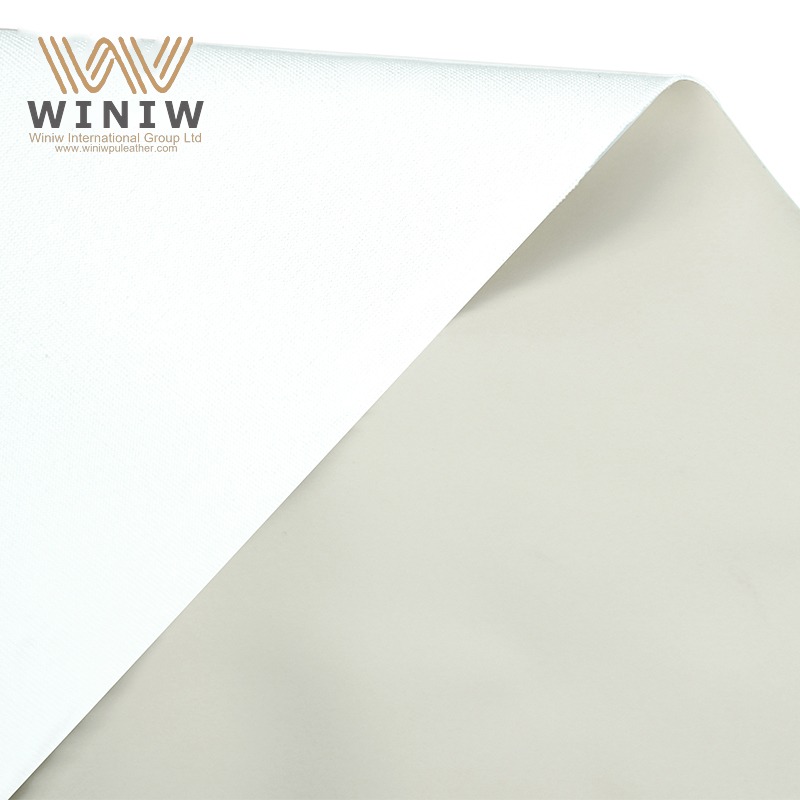
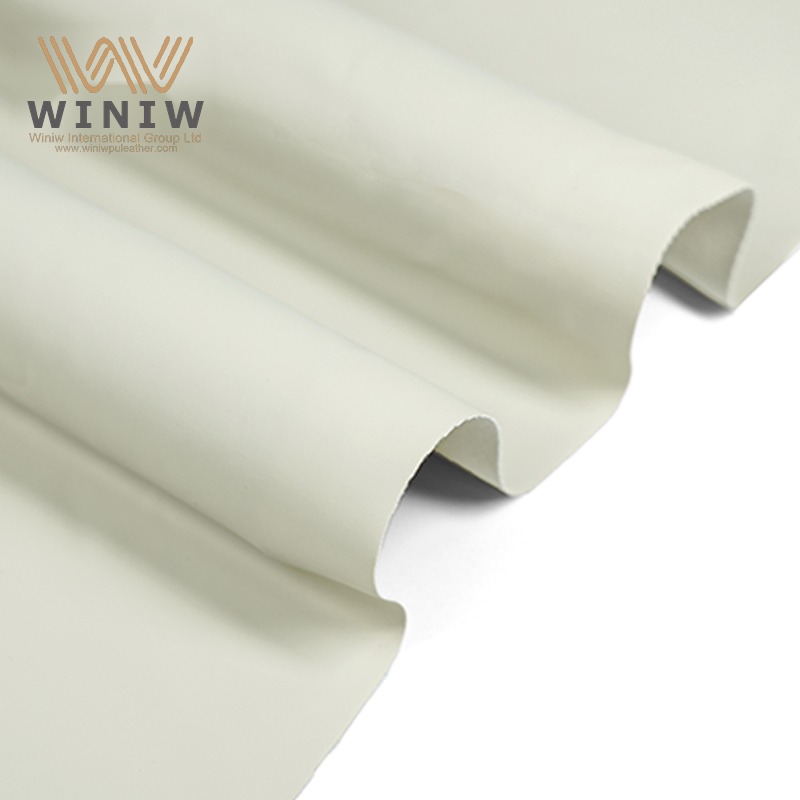
PU leather for trousers cut one way up, with face, backing, seam and pressing behaviour trialled on a test leg before a full bulk run is fixed.
Matériel :
PU coated synthetic leatherComposition :
PU (polyurethane) coating on a textile backing, garment gradeÉpaisseur :
Per project confirmationLargeur :
Per project confirmationCouleur :
Cream / ivory as shown; custom shade matched to your referenceDélai de mise en œuvre :
Quoted with the order, after the colour card is approvedCapacité de production :
About 1,000,000 metres per month across our production linesTrousers are the least forgiving garment to cut from a coated material. A jacket can hide a tone step under a collar or a pocket flap; a leg panel runs from waistband to hem in one visible piece, and both legs sit side by side in the same photograph. If the two legs are cut in opposite directions along the roll, the surface catches light differently and the pair looks mismatched before it has been worn once.
That is a marker question, not a coating question. What we control is the material that goes into the marker: a face with consistent direction, a backing that feeds flat, and a roll build that lets a long leg panel be cut without a join. What you control is how the lay is planned. The two have to be agreed before the first test leg is cut.
01
Grain and nap
A coated face has a direction. Cut one leg up the roll and one down and the pair reads as two tones under shop light.
02
Seam behaviour
A coated material has no give at the stitch line. Tension, needle and stitch length are set on a test leg, not on the bulk.
03
Pressing and creases
A crease pressed into a coated surface can stay there. Press through a cloth, at a setting proven on the test piece.
| Parameter | Current Product Information | Buyer Confirmation |
| Base and face | PU (polyurethane) coated synthetic leather, textile support layer | |
| Surface | Smooth to lightly grained; matte through low gloss, finished to order | Chosen against a physical reference |
| Flexibility | Soft, pliable, garment grade; stiffness adjusted at coating stage | |
| Gauge | Per project confirmation | Fixed after test leg |
| Roll length | Per project confirmation | Quoted for your marker |
| Shade reference | Cream / ivory as photographed; matched to your reference | Physical reference required |
| Run size | 300 m per colour as a standard run | Trial length available |
| Colour trial | Free A4/A3 swatch, freight collect; colour trial 3–7 days | |
| Roll packing | Roll with inner poly bag and outer PP sleeve | |
| Chemical screening | Intertek SZHH01505701, material level |
Front and back leg
The panel that shows tone and grain direction most openly; cut both legs the same way up.
Waistband
A short, curved piece where a stiff face will not follow the curve without a notch or a join.
Pocket facing and welts
Small parts that take the most handling; a face that marks under the needle will show here first.
Send the part list with the enquiry. A trouser brief that names the parts, the seam type at the outseam and the finish expected at the hem gets a piece cut for those parts, rather than a generic reference that answers none of them.
OUTSEAM
Single or lapped
The longest visible line on the trouser. A lapped outseam hides the raw edge; a single one needs the surface to hold a clean topstitch.
INSEAM
Curve and feed
Short seam, tight curve. This is where a coated surface tells you whether your presser foot is set for it.
WAISTBAND
Join and tack
Two or three layers meet here. Fusing or interlining is a decision made before the band is cut, not after.
HEM
Turn and finish
A turned hem shows the backing. Allow for it in the marker, and finish the inner edge so it does not fray in wear.
A trouser brief is settled at three places in our building, and none of them is the sales desk. The first is the sample room, where the hand you asked for is matched against the surface and the backing together: a soft hand with a stiff backing still cuts like a stiff material, and that is easier to see on the bench than to describe in a message. The second is the test cutting table, where a length from the roll you will actually receive is laid out and a leg panel is cut in the direction your marker runs. The third is the inspection table, where the piece is checked for surface marks and for the way the backing has held its shape after handling.
Nothing here is a number you have to take on trust. A test length travels with the swatch when a trouser programme is being quoted, and the leg you sew from it is the leg we ask you to judge. If the surface marks under your needle or the hem will not press flat, that is the stage to say so, while the bonding setting is still open.
A coated face does not slide the way a woven does, and it does not forgive a mark. Four settings decide whether the first leg behaves: the presser foot pressure, which is usually too heavy to begin with; the needle, where a sharp point leaves a permanent hole and a ball point is the safer start; the stitch length, which is longer than a shirt setting so the feed does not gather the seam; and the thread, where a bonded thread runs cooler through a coated surface than a soft spun one.
Then the handling around the machine matters as much as the machine. Do not backstitch over a finished topstitch line; run off and trim instead, or bar-tack on the inside where it will not show. Keep a scrap under the foot when you start and finish a seam so the feed dogs do not chew the edge. Turn the work, never pull it: a stretched seam on a coated surface does not recover when it cools.
Two pairs can be cut from the same roll and still read differently because of fittings. A belt loop folded from the same piece keeps the tone continuous round the waist; a loop cut from an offcut can sit a band away from the panel it is sewn onto. A coin pocket, a fly shield and a back pocket facing are all small, handled pieces where a surface marks under the needle sooner than on a flat leg.
Turn-ups and knee darts show the other side of the same problem: both fold the material back on itself. A turn-up reveals the support layer, so it is worth deciding at the marker whether that layer is something you are happy to show. A knee dart on a coated surface holds a pressed line, which is either the point of the design or a defect, depending on what the fit session approved.
A trouser brief brings its own acceptance list, and ours is built the same way: the test is named, the sample is the construction you are buying, and the report belongs to that sample. Seam strength, flexing at the knee, colour fastness to rubbing and hydrolysis are the four a trouser buyer usually asks to see first.
Chemical screening on the material is held as Intertek report SZHH01505701, a REACH SVHC screen at material level. It describes the material, not a finished garment, and it is quoted here with that scope so nothing in your file overstates it.
Why do the two legs of one pair look like different tones?
Because they were cut in opposite directions. A coated face changes how it reflects light depending on which way it runs, so a mirrored marker on a directional material produces a visible pair. The fix is in the lay, not in the coating: cut both legs the same way up, and keep the roll direction marked at the end of the table.
How do we stop seams puckering on a coated material?
Puckering on coated material is nearly always stitch formation rather than the material itself: too much thread tension, too long a stitch for the feed, or a seam pressed before it is set. Sewing guidance on the problem names tension first, then stitch length and needle, and a light press after stitching to set the line. We send a test length so those three are settled on your machine before bulk.
Will the surface crack along a pressed crease?
A coated face cracks when it has gone stiff, dried out, or is poorly supported by its backing, and a hard crease pressed into it is where that shows first. Press through a cloth at a setting proven on the test piece, avoid holding the iron on one line, and store finished trousers flat or on a proper hanger. If your finishing line uses a strong crease, tell us at spec stage: the hand can be set softer for that route.
Can the waistband be bonded or interlined instead of sewn?
Both routes are used on coated trousers, and which one suits depends on the hand you have chosen and the finish you want at the waist. Bonding needs a face that tolerates the heat cycle; interlining needs a backing that grips without showing through. Send the waistband construction with the brief and the test length comes with a note on which route we would try first.
Can you cut a trial leg in our own tone before we commit?
Yes. A colour trial runs three to seven days from a physical reference, and the trial piece comes from the same construction as the run. Sew it, press it, hang it overnight: a leg that has been through your finishing line says more than a card ever will.
Synthetic leather for garments
The wider synthetic range, when a brief spans trousers and outerwear.
Artificial leather fabric for garments
An alternative face for buyers comparing hand and drape.
The full category, including microfiber and embossed constructions.
Three steps: ① send the part list and seam plan → ② we courier an A4/A3 swatch and a test length in that construction → ③ sew one leg, then the run is scheduled. Other questions go to the team on the enquiry form.
ÉTIQUETTES CHAUDES :




Business Phone : +8618150976625
E-mail : Hello@MicrofiberLeather.com
Mobile & WhatsApp : +8618150976625
Adresse : W6-302 Shimao Manhadun Shuanglong Road, Jinjiang Quanzhou Fujian China



© droits d'auteur 2022 Winiw International Co., Ltd.Tous les droits sont réservés.
XML | Politique de confidentialité |